How Automated Trading Works: Strategies, Tools, Bots & What the Data Shows

You have probably seen the pitch. "Set it and forget it. Let the bot trade for you." But the distance between that marketing line and what actually happens when software trades your money is worth understanding before you risk a single dollar.
Automated trading means using software to buy and sell financial assets based on rules you define in advance. The computer watches the market, spots the conditions you set, and places the order.
No clicking required. That part is real. What gets left out is how often these systems fail, who actually profits, and why the best-funded AI hedge funds still trail a basic index fund.
This guide on how automated trading works breaks all of that down, covering algorithmic trading strategies explained in plain language, whether automated trading bots forex tools actually deliver, and what automated trading for beginners really looks like once the marketing fades.
What Is Automated Trading and How Does It Work?
Automated trading is any system where software executes trades based on pre-programmed instructions. You are not clicking "buy." The machine is. Understanding how automated trading works starts with understanding the layers involved.
You define a set of rules, straightforward ("Buy when the 50-day moving average crosses above the 200-day") or involving dozens of layered variables. You tell the software exactly what conditions must be met before it acts.
Algorithmic trading is the broad term. A trading bot is the specific software that connects to your broker or exchange and carries out those instructions. Think of it like a thermostat: you set the desired temperature, and the thermostat monitors conditions and acts accordingly.
An execution algorithm is more specialized. It breaks a large order into smaller pieces and fills them gradually, minimizing market impact. Institutional traders moving millions of dollars rely heavily on this.
"Automated" is a spectrum. On one end, simple rule-based scripts follow if-then logic. On the other, machine learning models adapt as new data arrives. Most retail bots sit closer to the simple end; most institutional systems sit closer to the complex end. That distinction matters more than most bot marketing suggests.
How Does Automated Trading Differ from AI Trading and High-Frequency Trading?
These three terms overlap but are not interchangeable.
| Type | Definition | Typical Users | Retail Accessible? |
|---|---|---|---|
| Automated Trading | Any software placing trades without manual input, based on pre-programmed rules | Institutions and retail traders | Yes |
| AI Trading | Subset of automated trading using machine learning or neural networks to adapt | Hedge funds, quantitative firms, some retail platforms | Limited |
| High-Frequency Trading (HFT) | Executes thousands of orders per second, exploiting tiny price differences | Proprietary trading firms with co-located servers | No |
Automated trading is the broadest category. When people ask "does automated trading really work," they are usually asking about this entire spectrum rather than a single approach.
AI trading is a subset using machine learning or neural networks that can adapt to changing conditions. A 2024 Bank of England and FCA survey found that 75% of 118 UK financial firms were already using AI in some capacity, including for algorithmic trading.
Still, the question "do AI trading bots actually work" deserves a nuanced answer: institutional AI tools backed by proprietary data and risk infrastructure are a different product from consumer-grade AI bots marketed on social media.
High-frequency trading (HFT) executes thousands of orders per second, exploiting price differences lasting fractions of a second. The global HFT market was estimated at $10.36 billion in 2024.
It requires co-located servers, direct market access, and infrastructure costing millions, making it unavailable to retail traders.
An IIROC study in Canada found that HFT firms placed 80% of all orders but completed only 35% of actual trades. That extreme order-to-trade ratio is a signature of HFT strategies constantly placing and canceling orders to probe liquidity.
How Much of the Market Is Already Automated?
More than you probably think. Anyone trading entirely by hand is the slowest participant in the room.
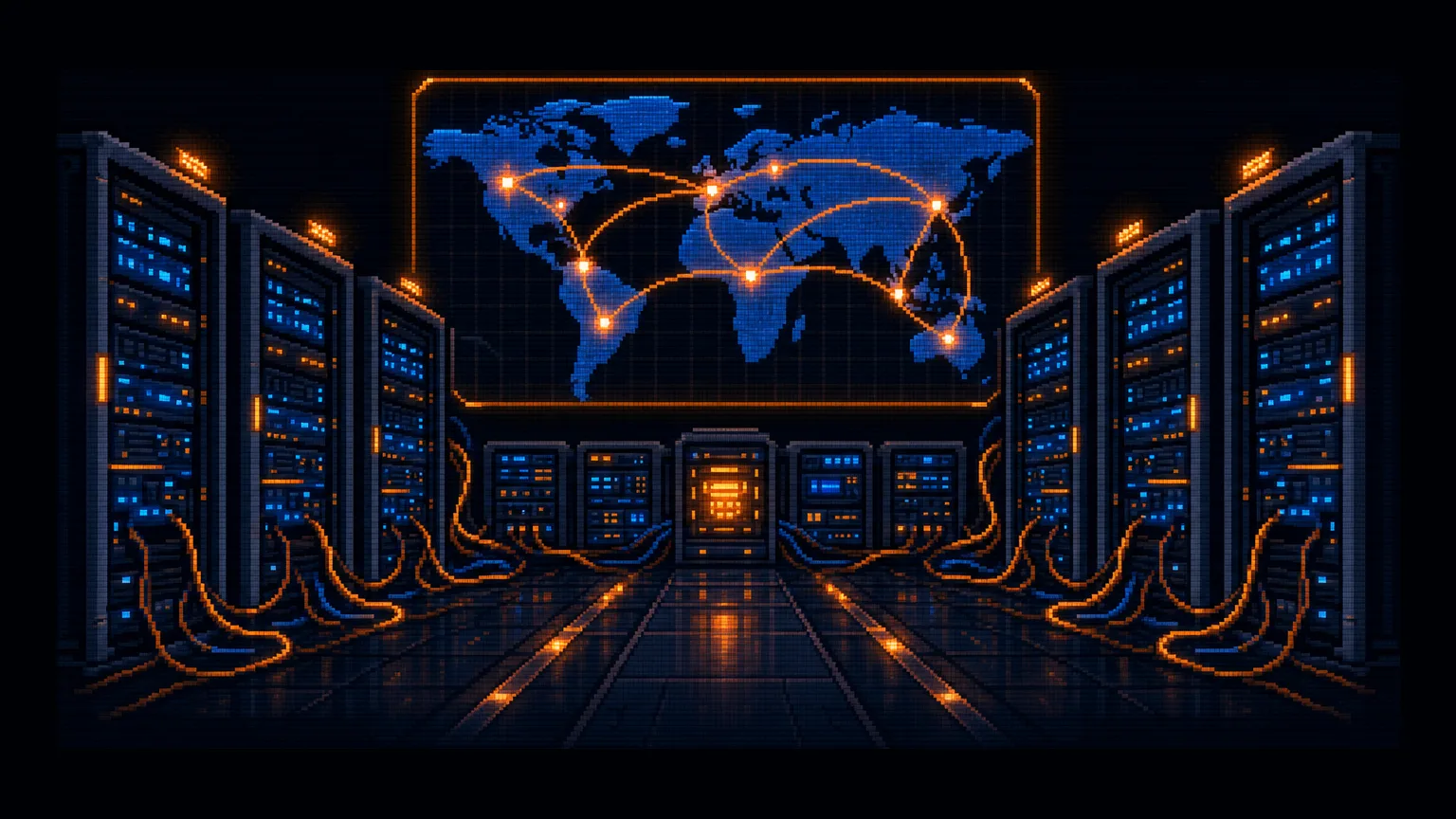
In the United States, approximately 70% of equity trading volume is algorithmic, according to an IMF Global Financial Stability Report estimate. Across developed equity markets, estimates range from 60% to 75%.
Emerging markets are catching up. In India, algorithmic systems account for roughly 40% to 55% of equity volume. SEBI data for FY24 shows algorithmic trading accounted for 97% of foreign institutional trades and 96% of proprietary desk trades on the NSE.
Foreign exchange is one of the most automated asset classes. Algorithmic orders rose from roughly 25% in 2006 to roughly 80% by 2016. For anyone exploring automated trading bots forex tools, that is the environment you are stepping into: a market where institutional algorithms already dominate order flow.
The global algorithmic trading market was valued at $51.14 billion in 2024 and is forecast to reach $150.36 billion by 2033, growing at a CAGR (compound annual growth rate) of 12.73%.
| Metric | Value |
|---|---|
| U.S. equity volume that is algorithmic | ~70% |
| Developed-market algo volume range | 60% - 75% |
| India equity algo volume | ~40% - 55% |
| NSE foreign institutional trades via algo (FY24) | 97% |
| NSE proprietary desk trades via algo (FY24) | 96% |
| Forex algorithmic order share (by 2016) | ~80% |
| Global algo trading market size (2024) | $51.14 billion |
| Projected global algo trading market (2033) | $150.36 billion |
| CAGR (2024 to 2033) | 12.73% |
| Global HFT market (2024) | $10.36 billion |
What Are the Best Automated Trading Strategies?
There is no single best automated trading strategy. Each works under specific conditions and fails under others. Granular public performance data by strategy type is not readily available, so what follows describes how each operates and where it tends to break down.
Understanding these trading bot strategies is essential before choosing one to automate.
| Strategy | How It Works | Best Conditions | Main Risk |
|---|---|---|---|
| Trend Following | Identifies sustained price movements and trades in that direction | Strong directional markets | Loses money in choppy, sideways markets |
| Mean Reversion | Buys when price drops below its average, expecting a bounce | Range-bound markets | A "dip" may be a genuine collapse |
| Arbitrage | Buys on one market and sells on another to profit from price gaps | Fragmented markets with discrepancies | Opportunities shrink as more bots compete |
| Market Making | Places both buy and sell orders, profiting from the bid-ask spread | Liquid markets with steady flow | Requires significant capital and speed |
| Execution Algorithms | Breaks large orders into smaller pieces to minimize market impact | Any market where large orders move the price | Not a return-generating strategy |
Trend following. The bot identifies a sustained price movement and trades in that direction. It bleeds money in choppy, sideways markets. This is one of the most common algorithmic trading strategies explained in beginner resources, though its simplicity can be deceptive.
Mean reversion. Assumes prices tend to return to an average. If a stock drops sharply below its recent average, the bot buys, expecting a bounce. The danger: sometimes a drop is a genuine collapse, not a temporary dip.
Worked example (trend following, simplified). A bot monitors a stock around $148. The 50-day moving average crosses above the 200-day at $150, triggering a buy of 100 shares. The bot holds until the 50-day crosses back below the 200-day at $165, triggering a sell.
Gross profit: ($165 - $150) x 100 = $1,500. Subtract roughly $4 in commissions and $4 in spread costs; net profit is approximately $1,492. In a choppy market where the crossover fires and quickly reverses at $147, the same trade loses $300 before costs.
Arbitrage. Buying an asset on one market and simultaneously selling it on another to profit from a price difference. The crypto arbitrage bot sector was estimated at $1.2 billion in 2024 with a projected CAGR of 8.5%.
The more bots chasing the same opportunity, the smaller and shorter-lived it becomes.
Market making. A market-making bot places both buy and sell orders, profiting from the spread. This requires significant capital and fast execution, making it primarily institutional.
Execution algorithms. Not about predicting prices, but about filling large orders efficiently. This is a major reason institutional desks account for roughly 61% of global algorithmic trading revenue.
Do Automated Trading Bots Actually Work?
This is the question that matters most. The honest answer is uncomfortable, and anyone asking "do automated trading bots actually work" deserves a data-driven response rather than a sales pitch.
The Eurekahedge AI Hedge Fund Index, tracking funds using AI and machine learning, delivered an annualized return of 9.8% from December 2009 to July 2024. Over the same period, the S&P 500 returned 13.7%.
Teams of PhDs with proprietary data and millions in infrastructure, on average, underperformed a simple index fund. That gap should give anyone pause before assuming automation equals outperformance.
On the retail side, in India, more than 90% of individual futures and options traders lost money between FY22 and FY24, with losses totaling roughly 1.8 lakh crore rupees (approximately $21 to $22 billion). Meanwhile, algorithmic trading accounted for 99% of profits earned by proprietary trading firms and foreign portfolio investors in FY26.
The gap is not subtle. Institutions have better data feeds, faster connections, deeper capital, and dedicated risk management. A retail bot sold for a monthly subscription is not competing on the same playing field.
| Comparison | AI Hedge Funds (Eurekahedge Index) | S&P 500 |
|---|---|---|
| Period | Dec 2009 to Jul 2024 | Dec 2009 to Jul 2024 |
| Annualized Return | 9.8% | 13.7% |
| Infrastructure | Proprietary data, PhD teams, millions in tech | Passive index, no active management |
Limitations and Drawbacks of Automated Trading
No honest assessment of how automated trading works is complete without acknowledging genuine limitations:
- Survivorship bias distorts reported returns. Hedge fund indices like the Eurekahedge AI Index drop funds that shut down, meaning reported averages likely overstate real-world performance.
- Backtesting does not equal live performance. A strategy that looks brilliant on historical data often fails when deployed with real capital due to slippage, latency, and changing market conditions. This gap is sometimes called "overfitting" or "curve-fitting."
- Retail bots lack transparency. No verified public performance data exists for individual commercial trading bots, making it impossible to objectively evaluate claims about what is the most successful trading bot.
- Costs erode thin margins. Subscription fees, VPS hosting, data feeds, and broker commissions can consume a significant portion of returns, especially for strategies with small per-trade profits.
- Technology dependence introduces fragility. Bots rely on stable internet connections, functional APIs, and broker uptime. A connectivity failure during a volatile session can leave positions unmanaged and exposed.
- Regulatory environments are shifting. SEBI, the FCA, and frameworks like MiFID II impose evolving requirements on algo trading. Strategies that are compliant today may require modification tomorrow.
- Automation does not eliminate the need for skill. A bot executes a strategy; it does not create a profitable one. Traders still need to understand market structure, risk management, and strategy design.
Can Beginners Use Automated Trading?
Yes. Automated trading for beginners is accessible on many platforms, but accessibility does not equal profitability. A bot does not create a winning strategy; it executes one. If the underlying logic is flawed, the bot will execute that flawed logic faster and more consistently than you ever could manually. This is the single most misunderstood aspect of retail automation.
Before automating anything, you need a trading plan that makes sense without automation. Backtesting (running your strategy against historical data) is essential but limited: past performance does not guarantee future results. Markets change, and a historically brilliant strategy may fail with real capital.
Automated trading software free of charge exists across several platforms. Verified performance data for specific commercial bots was not found in available sources. Be cautious of any tool making bold claims without audited results.
When evaluating the best automated trading bots, look for transparency about methodology, drawdown limits, and realistic return expectations rather than headline profit numbers.
Typical costs to budget for:
| Cost Category | Typical Range |
|---|---|
| Bot subscription | $15 to $200+ per month |
| Virtual private server (VPS) | $5 to $50 per month |
| Premium market data feeds | $10 to $100+ per month |
| Broker commissions and spreads | Your broker's standard rates (per trade) |
These costs compound quickly, especially for high-frequency strategies, so factor them in before assuming backtested returns translate to real profit.
For context, only about 13% of retail traders in India use algorithms, compared with 97% of foreign institutional traders.
Getting Started: Practical Next Steps
- Choose a broker that supports API or algorithmic access for your target market.
- Select or code a strategy based on rules you understand and can explain, not a black box. Study best automated trading strategies that have transparent logic before building your own.
- Backtest against historical data, keeping in mind that past results do not guarantee future performance.
- Paper trade (simulate with no real money) to see how the bot behaves in live conditions.
- Deploy with small capital so early mistakes cost as little as possible.
- Monitor continuously. Automation reduces manual effort but does not eliminate oversight, especially during volatile sessions.
What Are the Real Risks of Automated Trading?
Automated trading removes emotional decision-making. It does not remove risk.
- Over-optimization. Backtesting until a strategy looks flawless on historical data is called curve-fitting. The strategy breaks the moment live conditions differ even slightly.
- Technical failures. Bots depend on internet connections, APIs, and server uptime. A connectivity drop during a volatile session can leave positions unmanaged.
- Market regime changes. A strategy designed for calm conditions may generate catastrophic losses during a sudden crash. Bots do not automatically adapt unless specifically built to do so.
- Misleading marketing. If a vendor promises guaranteed returns, that is a red flag. No legitimate trading system guarantees profits. This is especially relevant when evaluating claims about the best automated trading bots or "guaranteed" trading bot strategies.
- Regulatory scrutiny. Regulators including SEBI, the FCA, and IOSCO are actively monitoring algorithmic and AI trading. An IOSCO survey found AI was used in 63.3% of algorithmic trading applications among surveyed firms. SEBI's 2025 framework requires unique algo order tagging and prior exchange-level approval before retail traders can deploy algorithms on Indian exchanges. In the EU/EEA, MiFID II imposes pre-trade risk controls and algorithm registration for firms using algorithmic strategies. Before deploying any bot, check your local regulator's specific requirements.
Frequently Asked Questions
Was this article helpful?