How to Stop Revenge Trading Before It Destroys Your Account

Your win rate drops from 49% to 31.2% on the very next trade after a loss. That single number, drawn from an analysis of 111,000 trades on a commercial analytics platform (not a peer-reviewed study, but a substantial dataset), tells you everything you need to know about how to stop revenge trading before it wrecks your capital.
Revenge trading is the act of jumping back into the market right after a loss, driven by emotion instead of your plan, whether you trade forex, crypto, or futures. This guide gives you seven concrete, data-backed rules to avoid revenge trading.
No platitudes. No motivational quotes. Just structure that works when your discipline doesn't.
What Is Revenge Trading and Why Does It Happen?
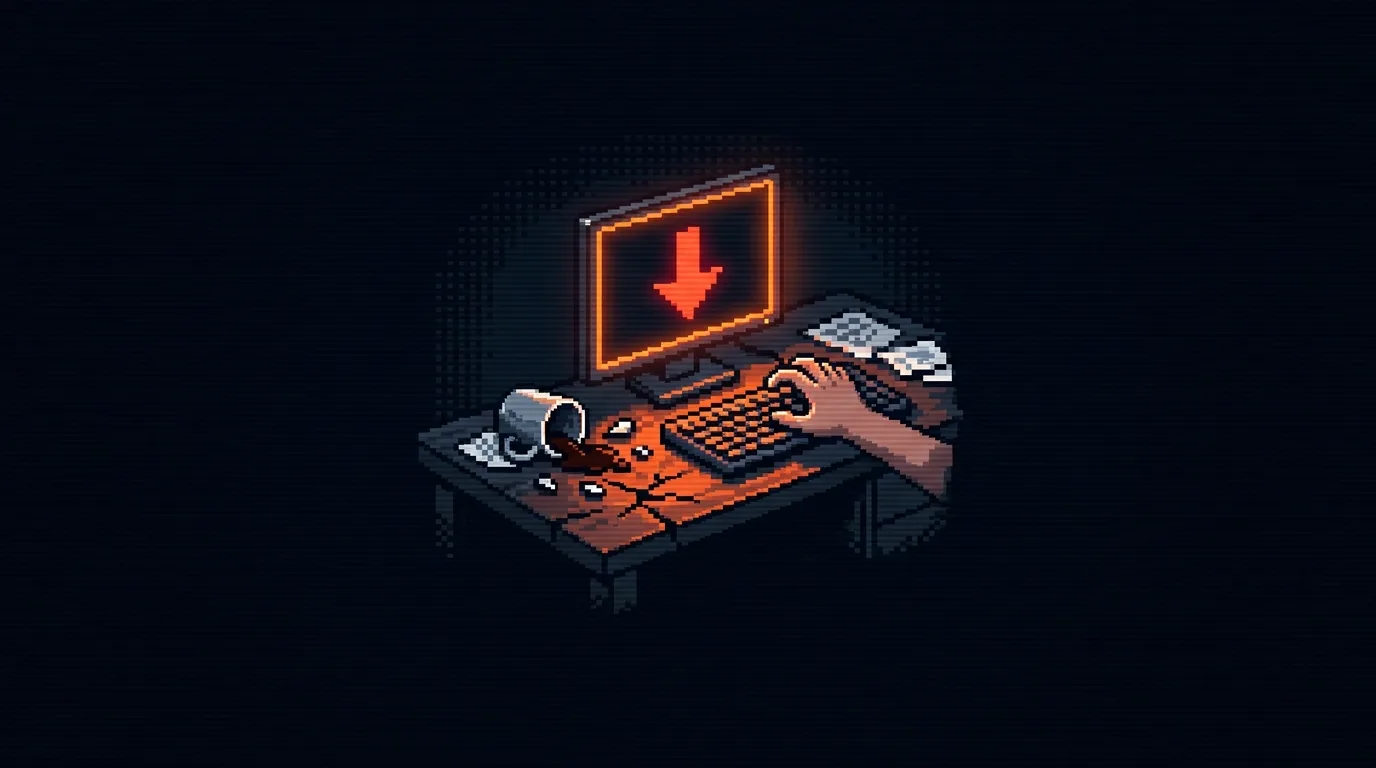
Revenge trading is re-entering the market after a loss with one goal: recovering that loss. Not because your strategy generated a valid signal. Because losing felt unbearable. It is emotion-driven, not plan-driven.
That distinction matters more than anything else in this article. If you have ever asked "how do I stop myself from revenge trading?", the answer starts with understanding what actually drives the behavior.
This pattern primarily affects discretionary traders: scalpers, day traders, and swing traders who make real-time entry decisions. Purely systematic or algorithmic traders are largely insulated because a machine does not feel the urge to get even.
Beginners are disproportionately vulnerable because they have not yet built the rule-based habits that experienced traders rely on, making a revenge trading beginner guide like this especially important early in a trading career.
What Is the Psychology Behind Revenge Trading?
Understanding revenge trading psychology and triggers is the first step toward building real defenses. The trigger is loss aversion, a concept well-documented in behavioral economics.
Losing $500 feels roughly twice as painful as gaining $500 feels good. When you take a loss, your brain does not want to accept it. It wants to fix it. Immediately.
This creates what psychologists call an emotional hijack. Your rational trading plan gets overridden by urgency. You skip your checklist. You increase your lot size (the number of units you trade per position).
You enter a trade you would never take on a calm Tuesday morning. The goal has shifted from "follow the system" to "get my money back."
That shift is where the bleeding starts.
A legitimate re-entry after a loss looks completely different. If your strategy generates a valid signal 20 minutes after your stop-loss triggers, that is plan-based trading. The difference comes down to intention. Are you following your rules, or chasing the last trade?
How Does Revenge Trading Differ from Overtrading?
Overtrading means taking too many positions, often out of boredom, overconfidence, or a need for action. Revenge trading is a specific, poisonous subset: emotionally triggered by a particular loss and aimed at recovering it.
They overlap constantly. A revenge trader usually overtrades. But someone overtrading out of boredom on a slow market day is not revenge trading. The root cause differs, so the fix does too.
If you want to stop overtrading and revenge trading, you need both position limits and emotional circuit breakers. Overtrading responds well to trade-frequency caps. Revenge trading requires cooling-off periods and structured self-checks.
What Does the Data Say About Trading After a Loss?
The most useful quantitative evidence on this topic comes from ProTradingLabs, a commercial trading-analytics platform. This is not a peer-reviewed academic study, and that distinction matters for context.
The dataset's composition, including instrument mix, trader demographics, and timeframes, is not fully disclosed, so readers should treat the specific percentages as directional rather than definitive. But the dataset is substantial enough to take seriously.
Their analysis of 111,000 trades found a win rate of just 31.2% on the trade following a loss, compared with 49% on the trade following a win. The average result after a loss was negative 0.05R, compared with negative 0.02R after a win, though the source's own updated analysis notes most of the gap disappears when overlapping positions are removed.
R (risk unit) measures trade results relative to the amount you risked, so negative 0.05R means you lost 5% of your risked amount on average.
46% of traders in the study performed worse after a loss. Meanwhile, 14% performed at least 0.3R worse, while 18% performed at least 0.3R better.
Some traders actually sharpen up after a loss, possibly because they refocus. But for nearly half the sample, the post-loss trade was statistically their worst.
The timing data is equally striking. Traders who re-entered within 30 minutes performed worse than those who waited 2 hours in 62% of cases. Speed kills.
| Metric | After a Win | After a Loss | Difference |
|---|---|---|---|
| Win rate | 49% | 31.2% | -17.8 percentage points |
| Average trade result | -0.02R | -0.05R | -0.03R worse |
| Traders who performed worse | N/A | 46% of sample | N/A |
| Traders at least 0.3R worse | N/A | 14% | N/A |
| Traders at least 0.3R better | N/A | 18% | N/A |
How Do You Recognize Revenge Trading in Your Own Behavior?
You know the feeling. A stop-loss hits. Within seconds you are scanning for another entry. Not because you see a setup. Because you feel something you need to act on.
That feeling is your first warning sign. Here are the concrete behavioral signals:
- Trading immediately after a stop-out without a valid setup
- Increasing your position size after a loss to "win it back"
- Abandoning your pre-trade checklist under emotional pressure
- Switching to a different currency pair or instrument on impulse
- Feeling anger or urgency rather than analytical calm
- Ignoring your daily loss limit because "one more trade" will fix things
- Telling yourself "this time is different" without any new data or signal
Some trading journal platforms describe potential revenge-trading indicators such as increased dollar risk after a losing streak or opening a position within 1 day of a stop-out. A MetaTrader 5 utility takes a more mechanical approach, defining revenge trading as opening a new trade within a configurable 15-minute window after a losing trade closes.
A practical self-check that works every time: if you cannot describe your edge in this trade before you click, you are probably revenge trading.
What Are the Seven Rules to Stop Revenge Trading?
Learning how to stop revenge trading comes down to building structural defenses that work even when your emotions do not cooperate. In my view, these are not suggestions. Treat them as non-negotiable rules in your trading plan.
| Rule | What It Does | Key Number |
|---|---|---|
| 1. Mandatory Cooling-Off Period | Breaks the emotional loop before it reaches the market | 62% performed worse re-entering within 30 min vs. 2 hrs |
| 2. Daily Loss Limit | Hard stop on trading when losses hit a set threshold | 2 to 3% of account equity per day (common example) |
| 3. Cap Consecutive Losses | Stops you before compounding emotional pressure | 3 consecutive losses |
| 4. Reduce Position Size | Halves financial damage if you trade emotionally | 50% of normal size |
| 5. Pre-Trade Checklist | Physical barrier between impulse and execution | 3 to 5 yes-or-no questions |
| 6. Journal Every Trade | Reveals revenge-trading patterns over time | Review after a few weeks |
| 7. Fixed Position Sizing | Removes the impulse to double down after a loss | Same % risk every trade |
How Does a Mandatory Cooling-Off Period Help?
This is the single highest-impact change you can make. The data backs it: 62% of traders performed worse when they re-entered within 30 minutes versus waiting 2 hours. Recommendations from trading educators range from 10 to 20 minutes to 15 to 30 minutes as a minimum.
Set a physical timer. Leave your screen. Walk somewhere. The point is to break the emotional loop before it reaches the market. This is one of the simplest ways to avoid revenge trading, and it costs nothing.

Why Should You Enforce a Daily Loss Limit?
Pick a number that fits your strategy and risk tolerance. One commonly cited example is stopping after 2 to 3% of account equity lost in a single day.
The specific number matters less than having a hard stop. When you hit it, you are done. No exceptions. This is essential for anyone learning how to control emotions in forex trading or any other market.
When Should You Stop Trading After Consecutive Losses?
Three consecutive losing trades is a widely recommended circuit breaker. The logic is straightforward: consecutive losses compound emotional pressure. Each additional loss makes the next revenge trade more likely, and more reckless.
How Does Reducing Position Size Protect You?
One trading education source recommends cutting to 50% of your normal position size after an emotionally reactive losing session. The logic is elegant: even if you do trade emotionally, the financial damage is halved.
This is a safety net, not a license to ignore your other rules. It limits the blast radius.
Why Is a Pre-Trade Checklist So Effective?
A written checklist forces a pause between impulse and action. Write 3 to 5 yes-or-no questions. For example:
- Does this setup match my strategy criteria?
- Is my position size (the percentage of your account risked per trade) within normal limits?
- Am I trading to follow my plan, or to recover a loss?
If any answer is "no," you do not trade. The checklist becomes a physical barrier between emotion and execution.
How Does Journaling Help You Stop Revenge Trading?
Trade journaling is recommended across virtually every serious source on this topic, and for good reason. You cannot fix what you cannot see.
After each trade, record the setup, your emotional state, whether you followed your checklist, and the result. After a few weeks, patterns emerge. You will see exactly when and how you revenge trade. That visibility is the first step toward control.
Why Does Fixed Position Sizing Matter?
Fixed position sizing means risking the same percentage per trade regardless of recent results. If your standard risk is 1% of your account per trade, it stays at 1%. After a win. After a loss. Always.
This removes the most dangerous lever a revenge trader can pull: the impulse to double down and recover losses in one shot. It is a critical part of understanding revenge trading: why it happens and how to stop it.
Worked Example: How Revenge Trading Compounds Losses
Suppose you have a $10,000 account risking 1% ($100) per trade. You lose three trades in a row, putting you down $300.

| Scenario | Risk per Trade (4th trade) | Total Drawdown |
|---|---|---|
| Revenge mode (double lot size) | $200 | $500 (5%) |
| Rule 4 applied (half position size) | $50 | $350 (3.5%) |
| Rule 3 applied (stop after 3 losses) | No trade | $300 (3%) |
The math is simple. The discipline is not. That is exactly why these rules need to be written down and enforced before the next loss hits. This example shows clearly how revenge trading destroys your account through compounding drawdowns.
Can You Really Be Emotionless When Trading?
No. And from my perspective, chasing that goal actually makes things worse, because you start ignoring your emotions instead of managing them. Traders searching for how to be emotionless when trading are usually asking the wrong question.

You will feel frustration after a loss. You will feel the pull to get it back. That is normal human psychology, not a character flaw.
The better question is: "How do I build rules that protect me when my emotions are loudest?" Learning how to control emotions in forex trading, or any market, is not about suppression. It is about structure.
That is what the seven rules above accomplish. They form a system designed to function regardless of your emotional state. The emotion still fires. The system prevents it from reaching the market.
Think of it as a circuit breaker. The electricity (emotion) still flows. The breaker (your rules) keeps it from burning down the house (your account).
But what if you have already blown through your rules? If you have already revenge traded and broken your daily loss limit, the priority is damage control. Step away from your platform for the rest of the session or the rest of the day.
Open your trading journal and document exactly what happened: the trades, the emotional triggers, and which rules you violated. Assess the total drawdown. Then review whether your position-sizing rules or daily loss limit need tightening to prevent a repeat.
When you do return to the market, re-enter only after completing a fresh pre-trade checklist pass on a valid setup. Prevention is the goal, but a clear recovery protocol keeps a bad day from becoming a catastrophic week.
What Are the Limitations of These Approaches?
No set of rules is a guaranteed fix, and it is important to be honest about the limitations.
- The data is directional, not definitive. The 111,000-trade dataset from ProTradingLabs is a commercial analytics platform, not a peer-reviewed study. The instrument mix, trader demographics, and account sizes are not fully disclosed, so the specific percentages (31.2% win rate, 62% timing effect) may not generalize to every market or trader type.
- Rules require consistent enforcement. A daily loss limit only works if you actually honor it. Many traders write rules during calm moments and break them under emotional pressure, which is precisely when the rules matter most.
- Cooling-off periods can cause missed opportunities. If a valid setup appears during your mandatory wait, you will miss it. Over time, this may cost real edge, especially for scalpers operating on short timeframes.
- Position-size reduction lowers upside too. Cutting to 50% of normal size after a loss halves potential gains on the next trade, not just potential losses. Traders who naturally sharpen up after losses (the 18% in the study who performed at least 0.3R better) may be unnecessarily handicapped.
- Journaling requires honesty and consistency. A trading journal only reveals patterns if you fill it out accurately every time, including the trades you are most ashamed of. Many traders skip entries after their worst sessions, which is exactly when journaling matters most.
- Individual variation is significant. The same study that found 46% of traders performed worse after a loss also found that some traders improved. No single set of rules will fit every trader's psychology, strategy, or market.
Acknowledging these drawbacks does not undermine the rules. It means applying them with realistic expectations and adjusting them to your own trading profile.
What Tools Can Help You Stop Revenge Trading?
Several categories of tools can support discipline, though pricing and feature sets vary.
Trading journals with behavioral analytics can flag patterns automatically. For example, one journal platform describes indicators such as increased dollar risk after a losing streak, or positions opened shortly after a stop-out.
Platform utilities can enforce cooling-off periods mechanically. A MetaTrader 5 tool, for instance, blocks trade entry within a configurable window after a losing trade closes. Traders accustomed to MetaTrader 4 may find that such add-ons are less widely available on that older platform.
Risk-management educational content on platforms like TradingView provides frameworks and community analysis. These are examples of what exists, not endorsements.
Frequently Asked Questions
Was this article helpful?