Trading Psychology and Emotions Forex: How to Manage Your Mindset for Better Results
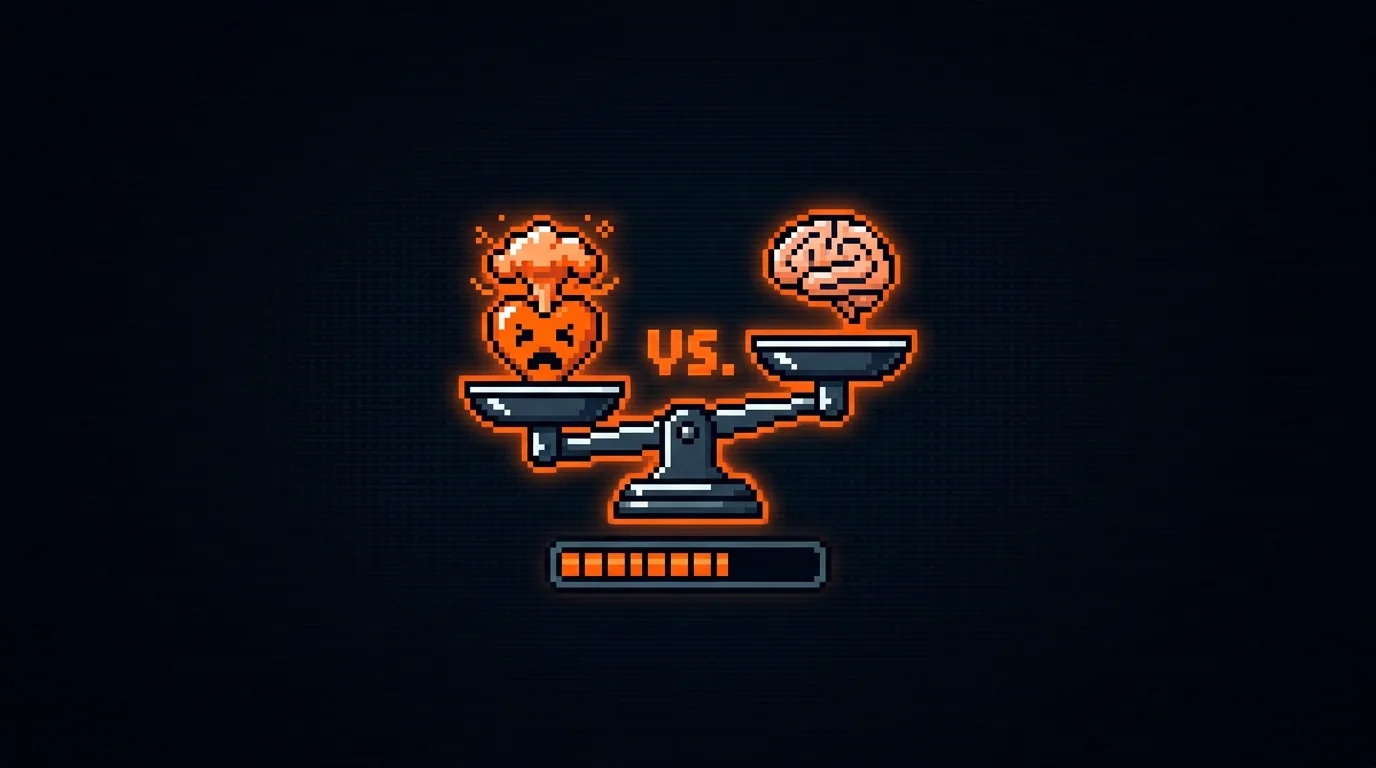
In short: Trading psychology and emotions forex traders face are the primary drivers of underperformance, not flawed strategies. Overconfidence costs roughly 6.5% per year, the disposition effect drains another 3.4 percentage points, and 70-80% of retail CFD accounts lose money.
This guide identifies the specific biases behind those losses and provides a journal-based, data-driven protocol to diagnose and fix emotional leaks in your trading.
Emotional trading has a measurable price tag. Research by Barber and Odean found that the most active investors earned roughly seven percentage points less per year than the least active.
That gap was driven almost entirely by overconfidence. Not bad luck. Not bad strategy. Just too many trades triggered by feeling sharp instead of being right.
Understanding trading psychology and emotions forex markets impose on participants is the first step toward closing that gap. This article breaks down what those psychological errors actually cost you in hard numbers, identifies the specific biases behind the losses, and gives you a data-driven protocol to fix them.
What Is Trading Psychology in Forex?
Trading psychology is the mental and emotional framework that governs how you interpret market information and execute decisions. In practice, it is the distance between your written plan and what you actually do when money is on the line.
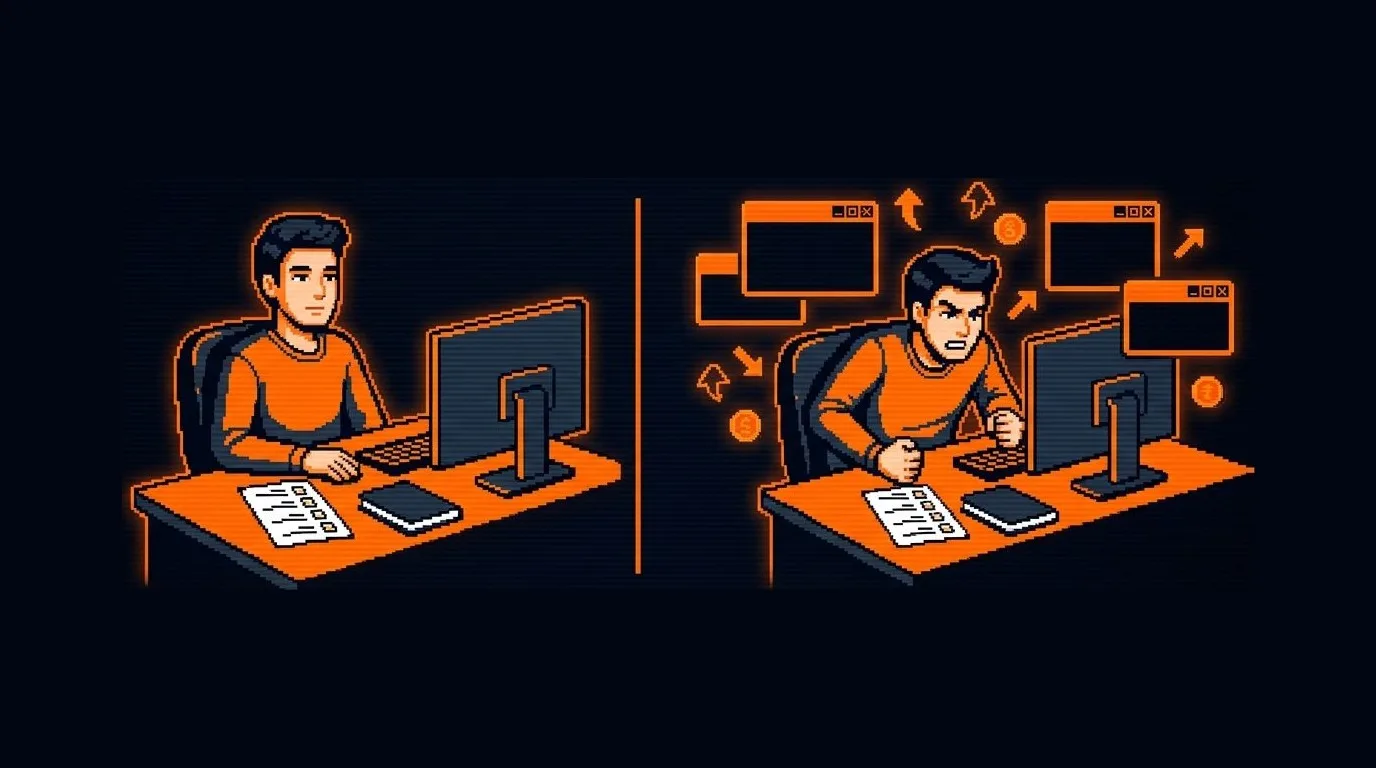
It covers how emotions and cognitive biases shape your choices at the screen, usually without you noticing until after the damage is done.
The surface emotions are familiar: fear, greed, hope, anger. Underneath those feelings sit cognitive biases that do the real structural damage.
Loss aversion (feeling losses more intensely than equivalent gains) warps how you size positions and place stops. Overconfidence pushes you to trade more often than your edge justifies.
The disposition effect (selling winners too early while holding losers too long) quietly bleeds your account trade by trade.
None of this is soft skill territory. Psychological factors reportedly account for roughly 60% of trading success, though the exact methodology behind that figure is not fully specified.
The direction is clear: your system matters, but your ability to actually follow it matters more. That is why understanding trading psychology and emotions forex markets demand is essential before you refine any strategy.
What Does Emotional Trading Actually Cost You?
Emotional trading is not abstract. It shows up in your returns. Academic research puts specific numbers on the damage.

How Much Does Overconfidence Cost?
Barber and Odean's landmark 2000 study found that the most active investor households earned 11.4% annually versus 18.5% for the least active. That is roughly seven percentage points gone.
Separately, traders who traded excessively due to overconfidence underperformed by 6.5% per year.
In forex, overtrading looks like this: you take a valid setup, it wins, and then you fire off three more trades that were never in your plan because you feel dialed in. Those three unplanned trades erode your edge.
Overtrading (placing more trades than your plan calls for, typically driven by overconfidence or boredom) is the single most expensive psychological error you can make.
Note: The 6.5% figure represents the gap between the most active traders and the overall market return, while the seven-percentage-point gap is measured against the least active quintile. Both derive from the same paper but use different benchmarks.
This research covers equity investor accounts. The behavioral patterns transfer directly to forex because the psychological mechanisms are identical.
What Does the Disposition Effect Cost?
Odean studied 10,000 brokerage accounts from 1987 to 1993 and found something striking. The proportion of gains realized was 0.148, compared to just 0.098 for losses, with a t-statistic above 35. Traders were far more likely to lock in a win than to cut a loss.
The cost? The winners these investors sold went on to outperform the losers they kept by 3.4 percentage points over the following year.
In forex terms, you are cutting your EUR/USD winner at +20 pips while holding your GBP/USD loser past -80 pips, hoping it comes back. It usually does not.
Consider a trader with a $10,000 account risking 1% ($100) per trade, with a planned stop of -30 pips and a target of +60 pips, trading 50 trades at a 40% win rate:
| Planned Outcome | Disposition-Effect Outcome | |
|---|---|---|
| Winner exit | +60 pips ($200) | +20 pips ($67) |
| Loser exit | -30 pips ($100) | -80 pips ($267) |
| Total from 20 wins | +$4,000 | +$1,340 |
| Total from 30 losses | -$3,000 | -$8,010 |
| Net result | +$1,000 | -$6,670 |
That is a swing of over $7,600, the 3.4 percentage point annual drag compounded trade by trade.
How Does Loss Aversion Distort Decisions?
Loss aversion means losses are felt roughly twice as strongly as equivalent gains. A $500 loss stings harder than a $500 gain satisfies.
This bias warps your risk/reward ratio (the relationship between potential loss and potential gain on any trade). You start widening stops to dodge the pain of being stopped out, or you shrink targets to grab profits before they vanish. Both behaviors destroy your edge over time.
Summary: The Cost of Emotional Biases in Trading
| Bias | Estimated Annual Cost | Primary Mechanism |
|---|---|---|
| Overconfidence / Overtrading | ~6.5 percentage points | Taking unplanned trades after wins |
| Disposition Effect | ~3.4 percentage points | Cutting winners early, holding losers |
| Loss Aversion | Compounds other biases | Widening stops, shrinking targets |
| Combined Impact | Up to ~10 percentage points | Systematic erosion of edge |
Why Do Most Forex Traders Lose Money?
The numbers are sobering. Most regulated European brokers are required to disclose the percentage of retail accounts that lose money. That figure consistently falls between 70% and 80%.
Estimates of consistently profitable day traders range from just 1% to 10%, depending on the study, market, and time period.
You have probably heard the claim that "90% of traders lose money." That figure cannot be globally verified. No single data set covers all clients of all brokers worldwide.
The 70-80% range from European disclosures is real and regulatory. Some other jurisdictions, including Australia and Japan, have their own risk-disclosure frameworks, though published loss rates vary. Many jurisdictions have no mandatory disclosure at all.

Van K. Tharp has been cited as stating that about 80% of traders are eliminated in their first year, with over 90% of those failures attributed to psychology rather than strategy. The original publication details could not be independently verified, so treat this as a second-hand claim, not settled fact.
What the data does make clear: losses are overwhelmingly driven by excessive position sizing, lack of a plan, and entering based on emotion rather than analysis. That is a trading psychology forex trader mindset problem, not a strategy problem.
How to Control Emotions in Trading: Practical Countermeasures
The enemies are specific. Each one has a countermeasure. Learning how to control emotions in trading starts with matching each bias to a structural fix.
How Do You Stop Overtrading?
You already know the cost: 6.5% annually. The fix is structural, not motivational. Set a fixed maximum number of trades per day or per week. Use a pre-session checklist. If the setup is not on the list, the trade does not exist.
Most modern platforms also allow automated stop-loss and take-profit orders or trade-frequency limiters that enforce discipline when willpower fails.
How Do You Handle Fear and Hesitation?
Surveys of active traders found severe stress in about 8-9% of participants and extremely severe anxiety in around 12-13%, though exact sample sizes and methodology were not fully specified. Markets characterized by ambiguity impose greater psychological pressure, making patience essential even when it feels like inaction.
The countermeasure: pre-define your entry criteria with complete specificity. When the setup appears, execute mechanically. Learning how to not get emotional when trading starts with removing the decision from the moment of execution.
How Do You Manage Greed and FOMO?
FOMO (Fear of Missing Out) is the emotional urge to jump into a trade because of a perceived opportunity rather than a plan-based signal. It tends to spike during strong trending sessions when social media is flooded with screenshots of winning trades.
The rule is simple: if the trade is not in your plan, it does not exist. This is one of the most important trading emotions and discipline tips you can internalize.
How Do You Beat the Disposition Effect?
Set your stop-loss and take-profit levels before you enter. Then do not touch them. The data says the winners you sell early will outperform the losers you hold by 3.4 percentage points.
Let the math manage the exit, not your anxiety. Knowing how to manage emotions while trading means trusting your pre-set levels over in-the-moment feelings.
What Happens When You Scale Up?
When traders move from smaller accounts to larger ones, a documented pattern emerges: average wins shrink while average losses grow, even with no change to entry criteria. The dollar amounts feel different, and that feeling changes behavior.
The countermeasure: increase position sizes gradually and keep risk as an identical percentage of capital at every level.
Emotional Trading: How to Avoid It at Each Stage

| Stage | Emotional Risk | Countermeasure |
|---|---|---|
| Pre-trade | FOMO, overconfidence | Checklist: only execute setups on the plan |
| Entry | Hesitation, fear | Pre-defined criteria; mechanical execution |
| During trade | Anxiety, urge to micromanage | Set stop-loss and take-profit; step away |
| Exit | Disposition effect, greed | Do not move stops or targets once set |
| Post-trade | Revenge trading after loss | Mandatory cooldown; log the trade first |
How to Fix Your Psychology in Trading: A Data-Driven Protocol
Feelings are hard to measure. Behavior is not. The right journal metrics turn vague self-assessment into concrete diagnosis. This is how to fix your psychology in trading with numbers instead of guesswork.
Which Journal Metrics Expose Psychological Leaks?
Five metrics, drawn from quantitative journal analysis, tell you whether emotions are running your account:
| Metric | What It Reveals |
|---|---|
| Expectancy in R-multiples: (Win Rate x Avg Win in R) minus (Loss Rate x Avg Loss in R) | Whether your system has a positive edge, measured in units of initial risk |
| Realized vs. Planned R:R Gap | Whether you are cutting winners short or letting losers run beyond your plan |
| Maximum Adverse Excursion (MAE) | The largest drawdown a trade experiences before closing, showing poor entries or excess pain tolerance |
| Maximum Favorable Excursion (MFE) | The largest unrealized profit a trade reaches before closing, revealing premature exits |
| Rule Adherence Rate (RAR) | The percentage of trades executed in full compliance with your predefined rules |
An R-multiple measures trade outcomes relative to your initial risk. For example, from a sample of 10 trades where you won 4 and lost 6, with average wins of 2R and average losses of 1R: Expectancy = (0.4 x 2) minus (0.6 x 1) = 0.2R.
If that number is negative, your emotional exits are destroying whatever edge your system provides.
If your RAR drops below 80%, your problem is not your strategy. It is you.
What Should Your Pre-Trade and Post-Trade Routine Look Like?
Before each trade: check your plan, confirm the setup matches your rules, and note your emotional state in one sentence. After each trade: log it against your plan, score your RAR, and write down any rule breaks and what triggered them.
This takes two minutes. It saves thousands. These trading emotions and discipline tips are simple, but they work because they make invisible behavior visible.
Does Physiological Self-Regulation Work?
Research on professional investment bank traders by O'Creevy et al. found a significant relationship between heart rate variability and trader experience, concluding that effective emotion regulation is a crucial component of trader expertise.
Practical tools: breathing protocols (four counts in, six counts out) before sessions, mandatory breaks after consecutive losses, and screen-time limits during high-volatility events. These are performance tools backed by physiological research, not wellness suggestions.
How to Manage Trading Psychology and Emotions Day After Day
Research cited in a 2024 Behavioral Finance Journal study (reported second-hand) suggests that emotion-driven decisions account for 68% of ordinary investors' trading decisions, with rational analysis making up only 32%. The exact original study details could not be verified, but the direction aligns with the broader evidence. You are probably more emotional in your trading than you think.
The daily protocol is straightforward:
- Plan before the session: Review setups, define entries, stops, and targets in writing.
- Execute mechanically during the session: Follow the checklist; if the setup is not on it, skip the trade.
- Review after the session: Log every trade, score RAR, and note any emotional triggers.
- Track your Rule Adherence Rate weekly: A declining RAR is the earliest warning that emotional trading is creeping back in.
When your RAR dips, you have your answer about whether emotions are leaking into your execution. Knowing how to manage trading psychology and emotions is not about eliminating feelings. It is about building a structure that contains them.
Your system gets you in the door. Your discipline keeps you in the room.
Frequently Asked Questions
Was this article helpful?