Risk Management for Beginners: The Rules That Keep Forex & CFD Traders in the Game

Risk management for beginners starts with a system of rules that caps how much you can lose on any single trade, across all open positions, and on your total portfolio. Its purpose is blunt: no single mistake ends your trading career.
The classic baseline is the 1-2% rule, meaning you never risk more than 1-2% of account capital on one trade. More advanced frameworks like the 3/5/7 rule layer additional caps across open exposure and reward targets.
In 2026, with 71% of Americans worried that market volatility could derail their long-term financial plans and U.S. federal debt surpassing GDP, these rules are not optional. They are structural.
This beginner guide to risk management gives you the exact numbers, formulas, and mental frameworks that forex and CFD traders need to stay solvent.
What Is Risk Management? A Definition That Actually Helps
Risk management is a set of pre-defined rules that limit how much capital a trader can lose per trade, across all open positions, and on their total account.
Most guides define risk management using corporate frameworks: identify, assess, mitigate, monitor. Four neat boxes. Completely useless if you are staring at a forex chart at 2 a.m. wondering whether to hold or cut your EUR/USD position.
For anyone exploring risk management for beginners, the concept is best understood as a personal rulebook that answers three questions before you ever open a position. How much can I lose on this trade?
How much can I lose across all my open trades right now? How much can I lose total before I stop, step back, and reassess everything?
The goal is not to avoid risk. You cannot trade forex or CFDs without it. The goal is to size and control risk so your inevitable losing trades do not consume your winners, or worse, your entire account.
Forbes frames the central investment risk of 2026 not as volatility itself but as "endurance," meaning whether portfolios can survive extended downturns in a high-debt environment. For traders, endurance is everything. Risk management is what provides it.
Why Does Risk Management Matter More in 2026?
The importance of risk management is not theoretical right now. The numbers are uncomfortable, particularly if you trade leveraged instruments.
U.S. federal debt held by the public surpassed GDP in Q1 2026, with both figures close to $31.3 trillion. Meanwhile, 57% of financial advisors identified inflation and interest rate changes as the most influential trend shaping portfolio strategies for 2026. Interest rate shifts move currency pairs directly. If you trade forex, this is your weather forecast.
JPMorgan Asset Management's Gabriela Santos has warned of "AI-factor" concentration risk that has spread beyond equities into fixed income. For CFD traders with exposure to stock indices or sector baskets, this kind of hidden correlation can blindside you without warning.
If professionals managing billions are worried, retail traders using leverage should be doubly attentive.
What Are the Types of Risk You Actually Face?
Understanding the types of risk management challenges means matching the right defense to the right threat. The table below summarizes the five primary risk categories every beginner trader should recognize.
| Risk Type | What It Means | Primary Defense |
|---|---|---|
| Market Risk | Price moves against your position; leverage magnifies the loss | Stop-losses and position sizing |
| Concentration Risk | Overexposure to one pair, sector, or correlated theme | Diversification and the 5% open-exposure cap |
| Emotional Risk | Moving stop-losses, doubling down, or revenge-trading after a loss | Pre-set rules, trade journaling, and stepping away |
| Fraud / Platform Risk | Losses from unregulated brokers or fraudulent platforms | Verifying broker regulatory credentials before depositing |
| Liquidity Risk | Inability to exit at your expected price, causing slippage | Trading liquid pairs and avoiding low-volume sessions |
Market Risk
The price moves against you. In forex and CFDs, leverage (the ability to control a position larger than your deposited capital) magnifies this. A 1% move against a 30:1 leveraged position means a 30% hit to your margin. You manage market risk with stop-losses and position sizing.
Concentration Risk
Too much exposure to one currency pair, one sector CFD, or one correlated theme. JPMorgan's 2026 AI-factor warning is a textbook case. Traders who went long on multiple AI-linked stock CFDs thought they were diversified. They were holding the same bet five times over.
Emotional Risk
Here is what nobody warns you about loudly enough. Emotional risk is the danger that you move your stop-loss, double down on a losing position, or revenge-trade after a loss. Financial advisors responding to the Allianz Q2 2026 survey emphasize emotion management and discouraging short-term reactions as a core strategy.
Your biggest opponent is rarely the market. It is your own panicked decision-making at 3 a.m.
Fraud and Platform Risk
Especially relevant in crypto, but also a concern with unregulated CFD brokers. Binance reports having intercepted $10.53 billion in potential fraud between 2025 and Q1 2026, and recovered over $8.2 billion in user assets since 2021 as of June 2026. These are Binance's self-reported figures, not independently audited.
The takeaway: verify your broker's regulatory credentials before depositing a single dollar.
Liquidity Risk
Liquidity risk is the danger that you cannot exit a position at the price you want. In major forex pairs like EUR/USD, this is rarely a problem. In exotic currency pairs, small-cap stock CFDs, or crypto during low-volume hours, slippage (the difference between your expected exit price and the price you actually get) can turn a controlled loss into a catastrophic one.
What Are the Basic Steps of Risk Management Every Beginner Needs?
Five steps. All concrete. These are the basic steps of risk management that every new forex or CFD trader should follow before placing a single live trade.
Step 1: How Do I Decide What I Can Afford to Lose?
Before you open a single position, define your total risk capital. This is money you can lose entirely without affecting your rent, your groceries, or your sanity. Never use emergency funds, daily needs money, or borrowed money for trading. Full stop.

Step 2: How Do I Apply the Per-Trade Risk Cap?
The classic rule: risk no more than 1-2% of your total account on any single trade. Conservative beginners should start at 1% or less.
An alternative framework, the 3/5/7 rule, sets three layered caps:
| Cap Level | Maximum Risk |
|---|---|
| Per individual trade | 3% of total capital |
| All open trades combined | 5% of total capital |
| Total portfolio: minimum reward target on winning trades | 7% of total capital |
Step 3: How Do I Size a Position Using a Formula?
Most beginners pick a lot size based on how much margin their broker makes available. Wrong approach entirely. You decide based on how much you are willing to lose.
The position sizing formula for forex:
Formula: Lot size = Dollars you will risk / (Stop-loss distance in pips x Pip value)
Illustrative example: you have a $5,000 account and use the 1% rule, so your maximum risk per trade is $50. You want to go long EUR/USD with a stop-loss 25 pips below entry. For a standard lot, pip value on EUR/USD is roughly $10. Divide $50 by (25 x $10) and you get 0.20 lots, or two mini lots.
That is your position size. Not whatever your broker's margin allows. What your risk budget allows.
These numbers are hypothetical and intended only to illustrate the formula.
The table below shows how different account sizes, risk percentages, and stop-loss distances change position size using this formula.
| Account Size | Risk % | Dollar Risk | Stop-Loss (pips) | Pip Value | Position Size |
|---|---|---|---|---|---|
| $5,000 | 1% | $50 | 25 | $10 | 0.20 lots |
| $5,000 | 2% | $100 | 25 | $10 | 0.40 lots |
| $10,000 | 1% | $100 | 50 | $10 | 0.20 lots |
| $10,000 | 2% | $200 | 50 | $10 | 0.40 lots |
All figures are hypothetical and intended only to illustrate the position sizing formula.
Step 4: Why Should I Set a Stop-Loss Before Entering?
Always set a stop-loss (a pre-placed order that closes your position at a specified price) at the level where your trading thesis is invalidated. Set it before opening the position. Not after. Not "mentally." An actual order placed with your broker.
Standard stop-loss orders can slip past the requested price during gaps or extreme volatility. Some brokers offer guaranteed stop-loss orders (GSLOs) for an additional spread or premium, ensuring execution at the exact specified price.
Step 5: What Risk-Reward Ratio Should I Demand?

Only take trades where the potential reward is at least twice the potential risk. That means a minimum 1:2 risk-reward ratio.
Risk $50, and the potential upside should be at least $100. This math matters because even traders who win only 40% of their trades can be profitable at 1:2.
Risk Management Techniques for Forex Traders
Every rule above applies to forex, but several characteristics of the currency market demand extra vigilance. Understanding these risk management techniques for forex traders is essential before going live.
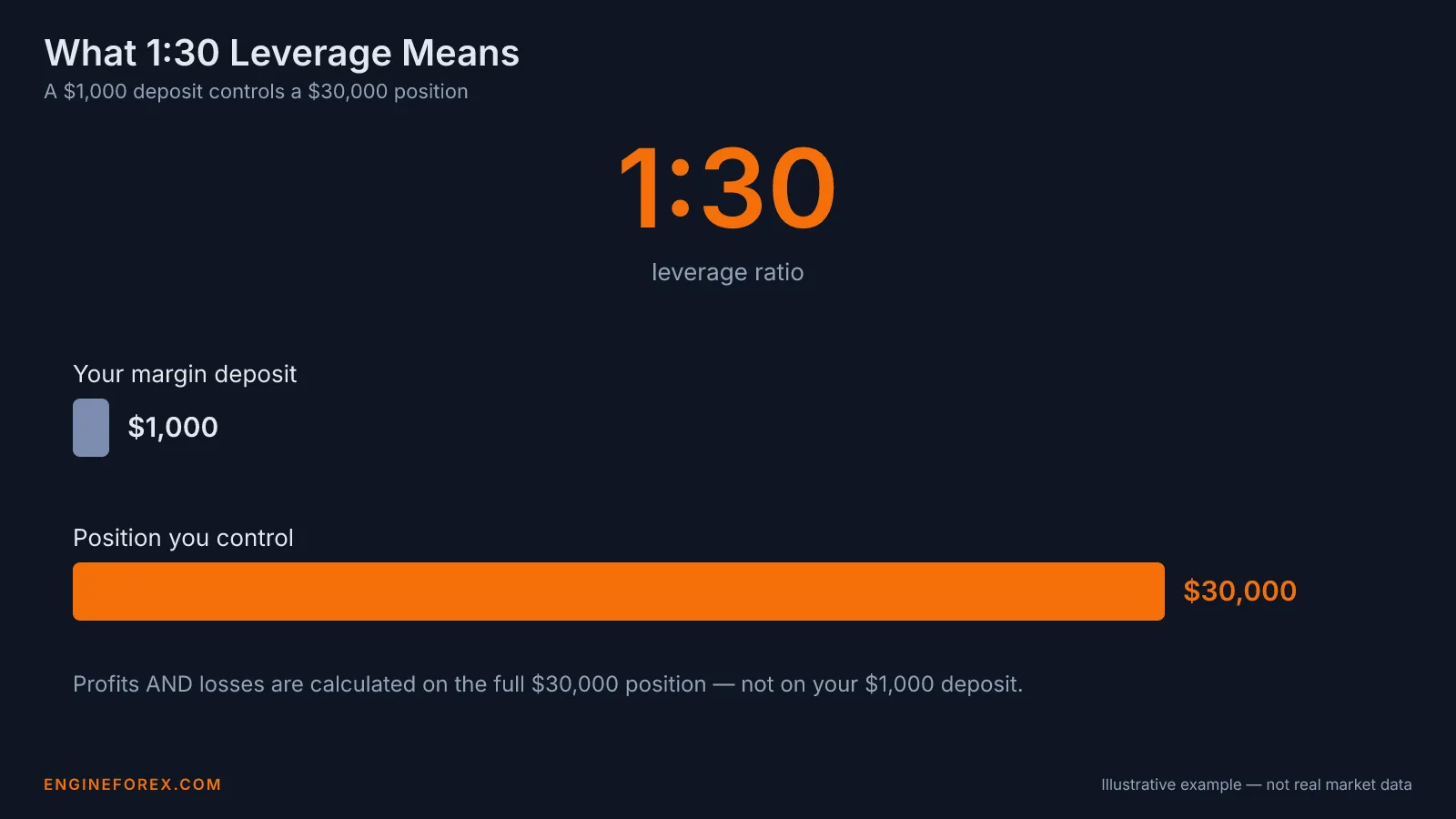
Leverage is your biggest amplifier. A 100:1 leverage ratio lets you control $100,000 with $1,000 in margin. The downside is that a 1% adverse move wipes out your entire margin. Specific leverage caps vary by jurisdiction and regulator.
Additionally, negative balance protection, which prevents traders from losing more than their deposited funds, is mandatory under some regulators but not guaranteed under others, particularly offshore jurisdictions. Always verify exact limits with your broker before placing a leveraged trade.
The 24-hour market never sleeps, but you do. Gaps and sharp moves happen during Asian session rollover or on surprise central bank announcements while you are asleep. A stop-loss is the difference between a controlled loss and a margin call.
Most brokers operate a two-tier system: a margin call level that issues a warning and a separate stop-out level at which forced liquidation occurs. These thresholds vary by broker and regulator, so verify them before you trade.
Correlation traps catch overconfident traders. Going long EUR/USD and long GBP/USD simultaneously feels like two trades. In practice, both are largely short-dollar bets. If the dollar surges, both positions lose together. Your combined risk across correlated pairs should still respect the 5% open-exposure cap.
How Does Diversification Reduce Risk?
Diversification, spreading exposure across different assets, pairs, and directions, is the simplest risk management tool available. Yahoo Finance's 2026 portfolio guidance puts it plainly: "Stay invested but be diversified and spread those bets."
For traders, this means not concentrating all positions in one currency pair or one sector of CFDs. For investors with limited capital, market analysts note that low-cost index funds provide built-in diversification and are typically a smarter starting point than stock-picking.
How to Learn Risk Management and Keep Improving
Demand for risk education is surging. The North America financial risk management courses market was valued at USD 484 million in 2025 and is projected to reach USD 997 million by 2035, growing at a CAGR of 7.5% from 2027 to 2035.
Formal courses are not the only path. For anyone figuring out how to learn risk management without spending thousands, three practical approaches cost you nothing but discipline:
- Demo trading with strict rules. Most forex brokers offer demo accounts. Use them, but treat the virtual capital as real. Apply the 1% rule, set stop-losses, track your risk-reward ratios.
- Trade journaling. Record every trade: entry, exit, stop-loss, lot size, and the risk percentage of your account. After 50 trades, patterns emerge that no course can teach you.
- Tracking fund flow data. Regional bodies publish regular fund flow data that builds intuition about market-wide risk appetite. India's AMFI releases AUM and inflow data within the first 10 business days of each following month, while U.S.-focused traders can use ICI weekly fund flow reports, and EPFR Global tracks cross-border capital movements.
The rules of risk management for beginners are simple. Following them under pressure is not. That gap between knowing and executing is where real learning happens.
Frequently Asked Questions
Was this article helpful?