What Is Slippage in Forex and How Does It Affect Your Trades?
Slippage is the difference between the price you expect when you place a trade and the price at which it actually fills. Sounds minor. It is not. An FXNX analysis of 50,000 real forex fills across multiple sessions and order sizes found the average slippage was -0.28 pips, and the distribution skewed negative.
Bad fills happened more often, and hit harder, than good ones. If you have ever wondered what is slippage in forex and why it matters to your bottom line, this article breaks down the mechanics, shows you how to calculate slippage in trading, and explains what you can realistically do to shrink it.
What Does Slippage Mean in Forex Trading?
You clicked "buy" at one price and got filled at another. That is slippage meaning in trading, captured in one sentence.
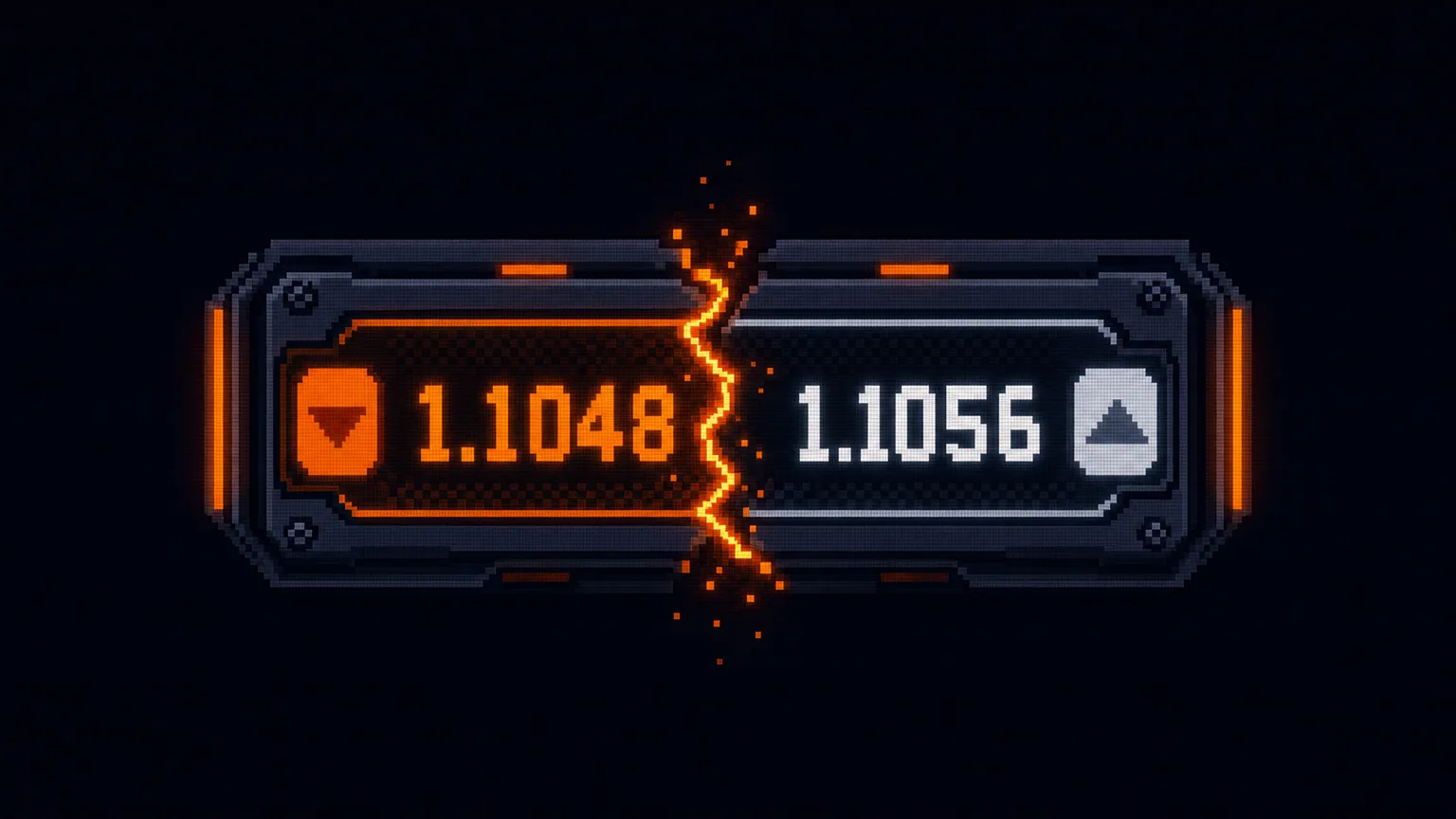
When you submit an order, a fraction of a second passes between the moment your platform sends it and the moment a counterparty matches it. During that sliver of time, prices can shift.
If the price moves against you, that is negative slippage (a worse fill). If it moves in your favor, positive slippage (a better fill). If it holds steady, zero slippage.
As CMC Markets puts it, slippage is "a normal part of trading, not a fee or penalty". Technically correct. But from a practical standpoint, consistent negative slippage on your entries is functionally a cost, even though it never shows up as a line item on any statement.
It erodes your account the same way a fee would. Nobody sends you an invoice for it, which is exactly what makes it dangerous.
This is why understanding what is slippage in forex matters. It is not academic. It is money leaving your account in a way you will not notice unless you deliberately track it.
Why Does Slippage Happen in Trading?
Markets move continuously. Order execution is not instant. That tension creates slippage. Four structural factors explain why slippage happens in trading.
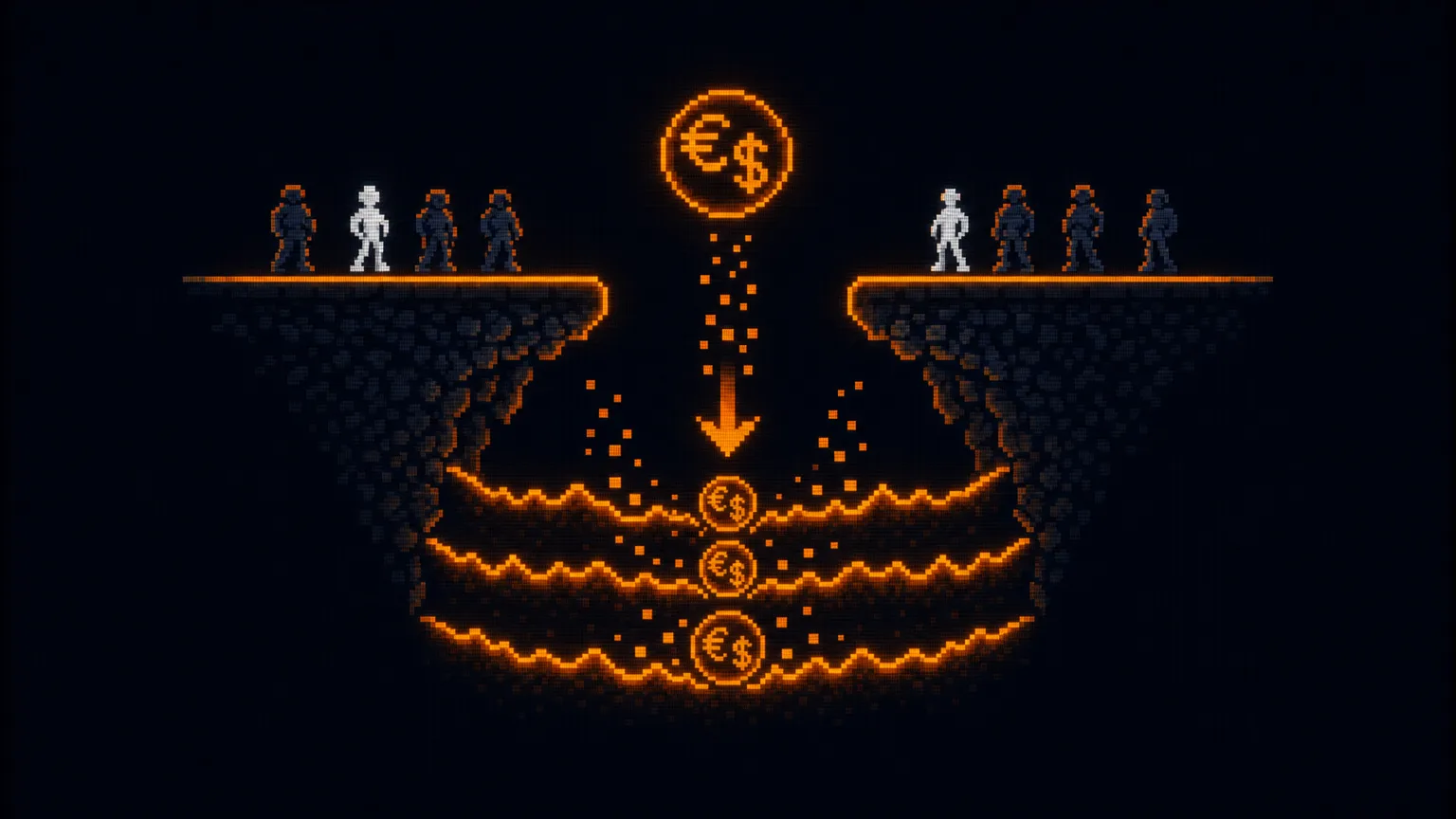
Time lag. Every order travels from your device to your broker's server, then onward to a liquidity provider. That journey takes a fraction of a second. In fast-moving markets, prices can shift meaningfully in that window.
Thin liquidity. When fewer buyers and sellers are active, less volume sits at each price level. Your order may consume the available liquidity at your requested price and spill into the next level, filling at a worse rate. This is especially common in exotic pairs or during off-peak hours.
Volatility. Fast-moving markets produce wider price jumps between ticks. The faster the market moves, the larger the potential gap between your order price and the next available fill.
News events. Major economic releases cause prices to gap, meaning the price jumps from one level to another without trading the prices in between. ECN brokers (those routing your orders directly to the interbank market rather than filling them internally) will fill your order at the first available price after the gap. If that price sits 5 pips from your order, you absorb all 5 pips.
None of these causes involve broker manipulation. Slippage is structural. That said, the quality of your broker's technology stack can absolutely make slippage better or worse.
Broker execution model. ECN and STP brokers pass your orders directly to external liquidity providers, where slippage is a structural reality of matching orders in a live market. Dealing-desk (market maker) brokers fill orders internally and may re-quote you instead of slipping your order, giving you a second chance to accept or reject the new price.
The trade-off: ECN/STP models offer more transparent pricing but expose you to slippage, while dealing-desk models may shield you from slippage but introduce re-quotes and potential conflicts of interest.
| Slippage Driver | How It Causes Slippage | When Risk Is Highest |
|---|---|---|
| Time lag | Prices shift during the milliseconds between order submission and fill | High-volatility sessions, slow connections |
| Thin liquidity | Not enough volume at the requested price forces fills at the next level | Exotic pairs, off-peak hours |
| Volatility | Wider tick-to-tick jumps increase the gap between expected and actual price | News releases, market opens |
| News events | Prices gap from one level to another without intermediate fills | NFP, central bank decisions, geopolitical shocks |
| Broker execution model | ECN/STP passes orders to live markets; dealing-desk may re-quote | Varies by broker infrastructure |
How to Calculate Slippage in Trading
The math is straightforward. Two formulas handle every scenario you will encounter. Knowing how to calculate slippage in trading allows you to quantify a cost most traders ignore.
What Is the Basic Slippage Formula?
For a buy order, adverse slippage equals execution price minus expected ask price. For a sell order, adverse slippage equals expected bid price minus execution price.
A positive result means you lost money on the fill. A negative result means you gained (positive slippage). Zero means a perfect fill.
The result lands in pips. You then convert to money by multiplying by your position size.
How Does a Slippage Calculation Look in Practice?
Say you place a buy order on EUR/USD with an expected ask price of 1.1050. Your broker fills you at 1.1053. Adverse slippage: 1.1053 minus 1.1050 equals 3 pips.
On a standard lot (100,000 units), one pip on EUR/USD equals $10. Three pips of slippage costs you $30 on that single trade. On a mini lot (10,000 units), the same slippage costs $3. On a micro lot (1,000 units), $0.30.
| Lot Size | Units | Pip Value (EUR/USD) | Cost of 3-Pip Slippage |
|---|---|---|---|
| Standard | 100,000 | $10 | $30 |
| Mini | 10,000 | $1 | $3 |
| Micro | 1,000 | $0.10 | $0.30 |
These are illustrative figures using standard forex lot-size math. Your actual slippage will vary by pair, session, and broker.

What Is Slippage Percentage in Trading?
Slippage percentage, sometimes called slippage rate, refers to the frequency with which a discrepancy arises between the order price and the actual execution price. It measures how often slippage occurs across a set of trades, not how large it is on any single fill.
Some brokers publish this metric as part of their execution quality reporting. If your broker does not publish execution quality data, ask for it. If they refuse, that silence tells you something worth knowing.
Your best alternative: track your own slippage rate by logging the difference between your intended price and fill price on every trade. Fifty trades will start to reveal a pattern. One hundred will give you something meaningful.
How Does Slippage Affect Your Trades?
Slippage directly shifts your entry and exit prices, changing your realized profit or loss on every affected trade. Understanding how slippage affects your trades is essential for any strategy that relies on precise entries and exits.
What Does the Data Actually Show?
The most rigorous publicly available analysis comes from FXNX, which examined 50,000 real forex fills. The findings are blunt.
Average slippage was -0.28 pips across all market conditions. The distribution was fat-tailed and negatively skewed.
In plain language: adverse fills happened more frequently and hit harder than positive price improvements. This is not a coin flip. Over a large enough sample, the risks of slippage in forex tend to cost you money.
Which Trading Styles Suffer Most?
Scalpers and high-frequency traders take the hardest hit. These strategies depend on capturing small price moves, often just a few pips per trade. When slippage erodes those thin margins on a high percentage of fills, the strategy's edge can vanish entirely.
Any scalping system that does not account for realistic slippage in its backtesting is essentially trading on fantasy numbers.
If you are backtesting any strategy, add a realistic slippage estimate to every simulated fill, typically 1 to 2 pips per execution for major pairs, and more for exotics or illiquid sessions. Without this adjustment, backtest results will overstate profitability, sometimes dramatically.
Slippage also causes stop-loss and take-profit orders to execute at different levels than planned. A stop loss set at 1.1000 might fill at 1.0995 during fast conditions, adding 5 unplanned pips to your intended risk.
Exit slippage is often more consequential than entry slippage because it directly increases your realized loss and can push your actual risk-per-trade beyond your planned limit.

For swing traders and position traders holding trades for days or weeks, individual slippage events matter less. A 0.3-pip slip on a trade targeting 150 pips is noise. But even for longer-term traders, slippage accumulates across hundreds of trades over months and years.
| Trading Style | Typical Target per Trade | Slippage Impact (at -0.28 pips avg.) | Relative Severity |
|---|---|---|---|
| Scalping | 2 to 5 pips | -0.28 pips erodes 6% to 14% of target | High |
| Day trading | 10 to 30 pips | -0.28 pips erodes 1% to 3% of target | Moderate |
| Swing trading | 50 to 150 pips | -0.28 pips erodes < 1% of target | Low per trade |
| Position trading | 150+ pips | -0.28 pips erodes < 0.2% of target | Negligible per trade |
Is Slippage the Same as Spread?
No. They are separate costs, and confusing them leads to underestimating what you actually pay to trade. The question "is slippage and spread the same" comes up frequently, and the answer is clear: they are distinct.
The spread is the gap between the bid and ask price. You can see it before you trade. It is the known cost of entry. Slippage, by contrast, is the unexpected deviation between your requested price and your actual fill. You only discover it after your order executes.
| Feature | Spread | Slippage |
|---|---|---|
| What it is | The gap between bid and ask price | The gap between your requested price and your fill price |
| When you know it | Before you click the button | After your order executes |
| Predictability | Visible in real time (though variable spreads fluctuate) | Unknown until execution is complete |
| Controllability | You can choose brokers with tighter spreads | You can reduce but not eliminate it |
| Frequency | Every single trade | Some trades, not all |
| Direction | Always a cost to the trader | Can be positive (better fill) or negative (worse fill) |
Both are real costs. They stack. A broker advertising tight spreads means little if they consistently fill you 2 pips worse than your requested price. Traders who fixate on spread comparisons while ignoring execution quality are often solving the wrong problem.
How to Avoid Slippage in Forex Trading
You cannot fully eliminate slippage. It is baked into how electronic markets work. But knowing how to avoid slippage in forex trading can meaningfully reduce your exposure. Five approaches hold up under scrutiny.
Trade during high-liquidity sessions. More participants means more volume at each price level, which means tighter execution. The London-New York overlap is typically the most liquid window for major pairs. Avoid trading during low-liquidity gaps like the period between the New York close and the Asian open.
Avoid market orders around major news releases. Prices gap during news events. If you place a market order during a non-farm payrolls release or a central bank decision, you are accepting whatever price the market offers after the gap.
Use limit orders. A limit order sets a maximum price for buys or a minimum for sells. If the market moves past your limit, the order simply does not fill. You avoid adverse slippage at the cost of potentially missing the trade. That is a legitimate trade-off, not a flaw.
Log your slippage. Record the difference between your intended price and your fill price on every trade. Over 50 or 100 trades, patterns emerge. Consistent negative slippage is a broker execution quality issue worth investigating, not bad luck.
Set a slippage tolerance on your platform. Most retail platforms, including MT4, MT5, and cTrader, allow you to set a maximum deviation (in pips) on market orders. If slippage exceeds your specified threshold, the order is rejected rather than filled at an unacceptable price. The trade-off is that in fast markets your orders may not execute at all.
| Slippage Reduction Method | How It Helps | Trade-Off |
|---|---|---|
| Trade high-liquidity sessions | More volume at each price level, tighter fills | Limits when you can trade |
| Avoid news-event market orders | Sidesteps price gaps | May miss post-news moves |
| Use limit orders | Prevents adverse slippage entirely | Order may not fill |
| Log slippage per trade | Reveals patterns, flags broker issues | Requires manual tracking |
| Set platform slippage tolerance | Rejects fills beyond your threshold | Orders may be rejected in fast markets |
Be realistic about what is achievable. The goal is not zero slippage. The goal is understanding what slippage costs you, reducing unnecessary exposure, and choosing brokers whose execution quality holds up when you look closely.
When traders ask how to avoid slippage in forex, the honest answer is: reduce and manage it, because complete elimination is not possible.
Frequently Asked Questions
Was this article helpful?